Winds pick up in AI stocks, while China's growth engine sputters again

Summary
- European and US equities rose 2.2–2.5% last week. AI stocks faced renewed risks from sector ties and Chinese competition, although return expectations remained strong.
- China’s October industrial production growth slowed to 4.8%, while retail sales rose just 0.4%. Fixed-asset investment fell 8.1% in January–October.
- Exports have supported China’s growth, but weak domestic demand and softer orders raise questions about sustainability. The author expects China to meet its growth target with no significant new stimulus this year.
This content is generated by AI. You can give feedback on it in the Inderes forum.
Automatic translation: Originally published in Finnish 16/11/2026, 05:45 GMT. Give feedback here.
Last week was an up week for European and US markets, albeit a windy one. A relationship scandal involving NVIDIA CEO Jensen Huang and his subsequent departure reminded investors in the sector that returns always come with risks. Circular deals among AI companies and the pressure on the sector from competing Chinese models have been a concern for some time, and last week's events drew attention to these as well. On the positive side, however, return expectations for the sector remain high, and economic sentiment has generally improved on both sides of the Atlantic.
| Indexes | Close | 1-week change | YTD | |
| OMX Helsinki | 13249.3 | 2.2% | 6.7% | |
| Eurostoxx 600 | 664.1 | 2.4% | 12.1% | |
| S&P500 | 7561.7 | 2.5% | 10.5% |
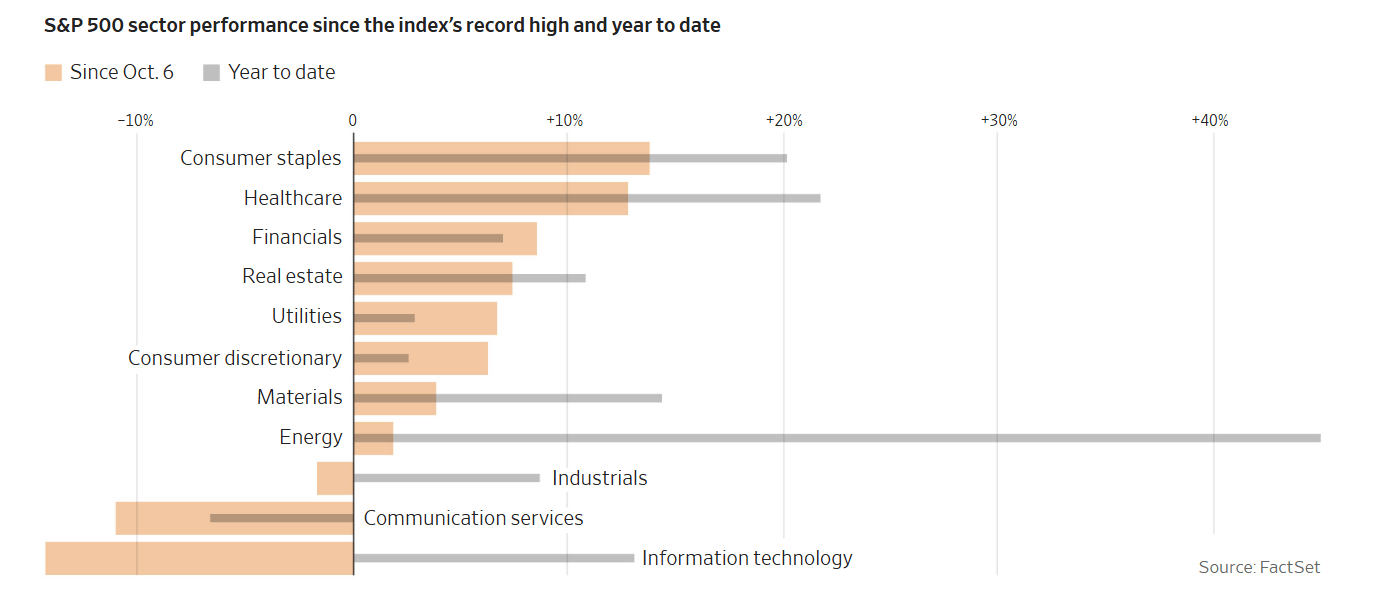
Source: WSJ
China's growth momentum weakens
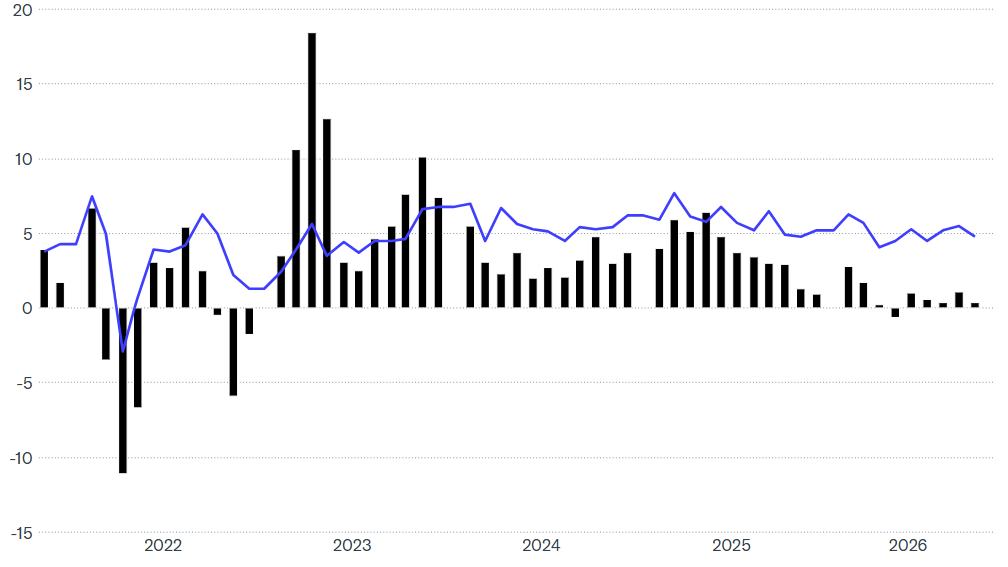
China's economy showed new signs of weakness in October. Industrial production growth slowed, and domestic consumption remained sluggish. Industrial production grew by 4.8% year-on-year, compared with 5.5% in September and a consensus estimate of 5.3%. Retail sales grew by only 0.4% (September: 1.1%; estimate: 0.8%). The decline in fixed asset investment deepened to -8.1% in January–October (January–September: -7.2%; estimate: -7.0%).
China: Industrial production and retail sales, year-on-year change, %
Source: LSEG
This year, China's growth has been supported above all by exports, driven by the global AI infrastructure build-out and demand for cars. High-tech and smart manufacturing accounted for more than half of industrial production growth in January–October. Strong exports, however, mask the weakness of traditional industries that rely on the domestic market. The official manufacturing PMI also showed new orders and export orders weakening in October, which raises questions about the sustainability of export-led growth.
The weakness in domestic demand is structural. A weak labor market and a years-long property market downturn have eroded household wealth and are keeping consumer confidence low. Property investment was still down 21.6% in January–October, and new home prices continued to fall. The urban unemployment rate edged down to 5.1% from 5.2% in September.
Despite the weak October, China remains on track to meet its 4.5–5.0% growth target, as Q3 GDP grew by 4.5% year-on-year. In recent months, Beijing has directed cheaper credit toward infrastructure and technology and expanded support for homebuyers. No significant new stimulus measures are expected this year, however, and next year, too, the government will likely do just enough to meet the official growth target. The scale of any stimulus will likely depend largely on how much export momentum fades.


